
By Scott Glasgow
The early settlers in Black Rock were unsuccessful in their effort to obtain water as wells from 50 to 75 feet failed to reach the water table. The Jubilee Water Works was incorporated in 1827 with a capital of $20,000 to supply water to the Village of Black Rock. Peter B. Porter was the president and Absalom Bull, secretary and treasurer. The spring was located near Delaware and Auburn at an elevation 20 feet above Black Rock and was conveyed by gravity through hollow logs. The logs were laid from 3 ½ to 11 feet deep and were 7 to 9 inches in thickness with a bore of 2 to 6 inches, each log was about 9 feet long. The logs were hauled from nearby farms by teams of oxen and farmers were paid 2 cents for every foot of timber delivered. Laborers who placed the logs were paid 1 dollar for a 12-hour day. A reservoir was constructed at the southeast corner of Amherst and Grant to maintain consistent water pressure (now the Polish Cadets parking lot). Initially, hydrants were installed at central spots in the village, but spigots were later added behind homes. The cost of service was 7 dollars a year for homes and 5 dollars a year for stores or offices. The system was extended to Buffalo in 1829 but by 1845 higher usage reduced capacity and service was limited to serve only Lower Black Rock. The Jubilee Spring continued to serve Black Rock throughout the 19th Century but by 1894 there were only about 200 customers and by 1898 only 30 customers remaining.
Native Americans called the spring Dyos-hih (the sulfur spring) and believed it had healing properties. There were claims of the “medicinal and invigorating qualities” of the spring water and it was said the water was “much superior to our presently chemically doctored water”. As late as the 1920’s the water was still being bottled and sold in the region and other parts of the country.
The Jubilee Spring was sold in 1899 for $45,000, Jubilee Commissioner Frank Argus insisted the proceeds be used to fund the construction of a Library to serve the Black Rock community. It would take several years but in 1915 the Jubilee Library was dedicated at 1932 Niagara Street, the building still stands and is part of the Lower Black Rock Historic District. The Jubilee Spring exists to this day feeding a small lake in Forest Lawn Cemetery.
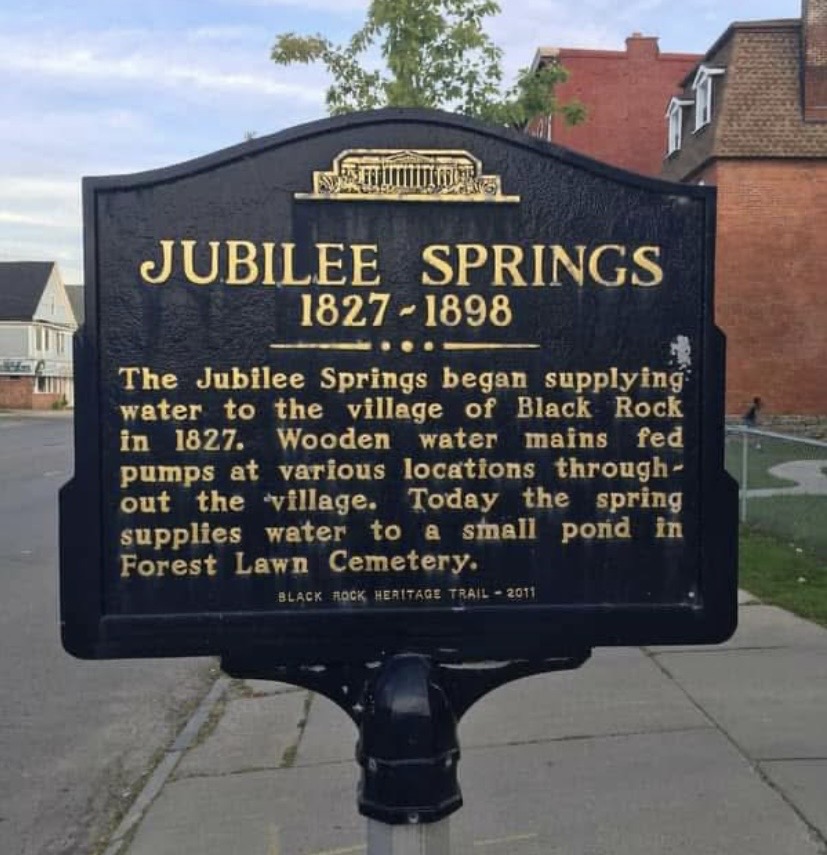
Above: Jubilee Springs historical marker, Black Rock.
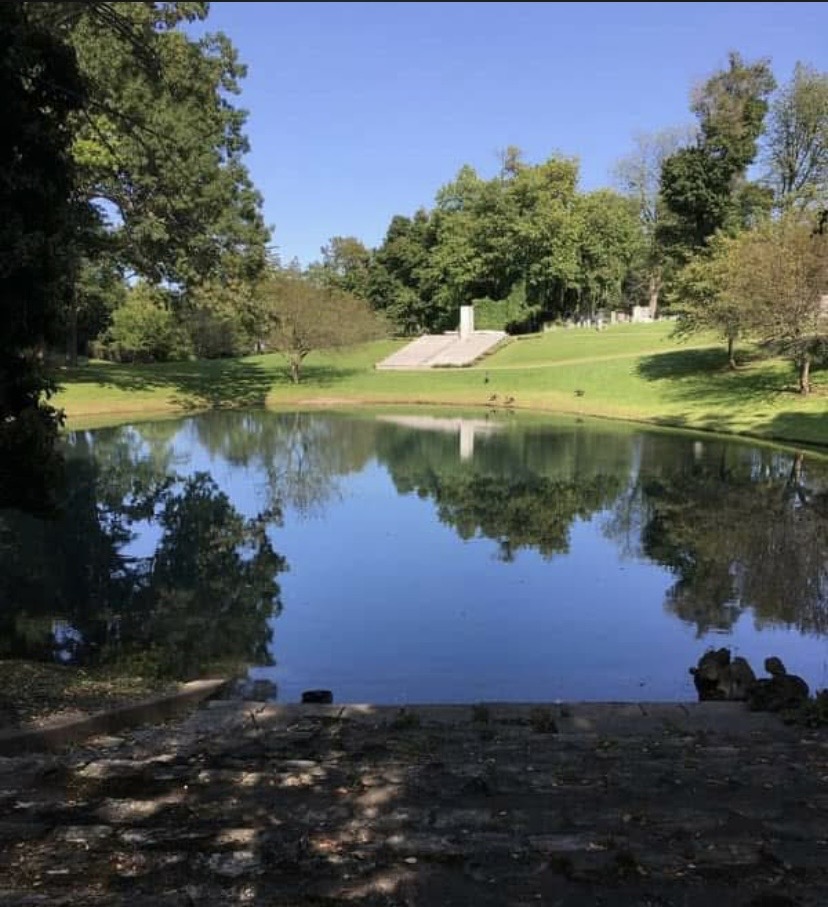
Above: Jubilee Springs Pond, Forest Lawn Cemetery, Buffalo.
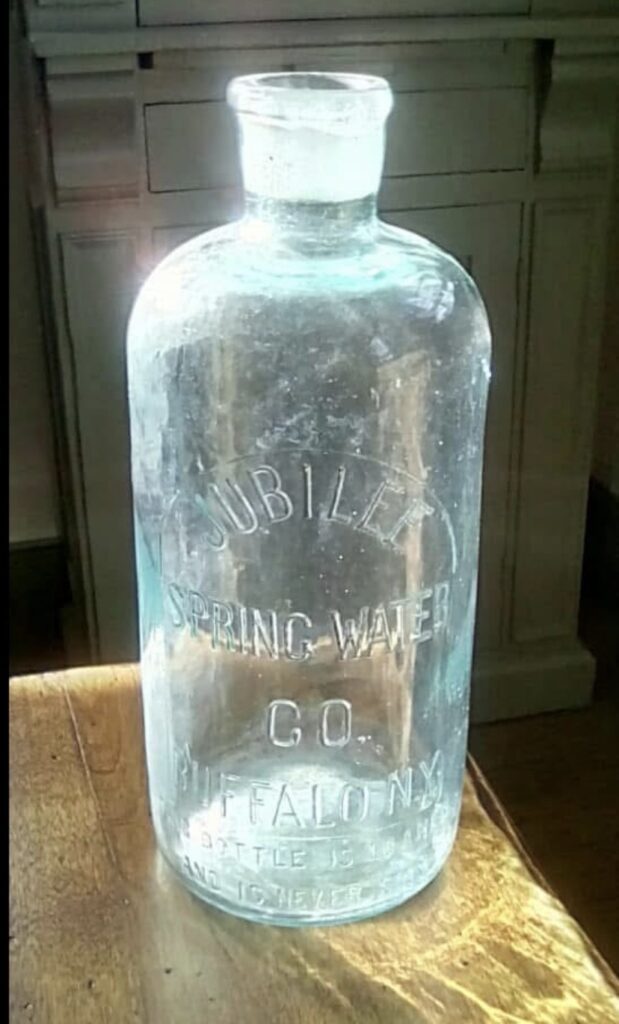
Above: A glass bottle from the Jubilee Springs Water Co., Buffalo NY.