By Mary Ann Kedron PhD
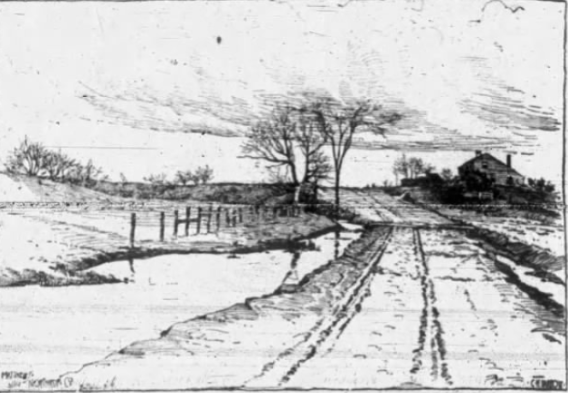
The emergence of Riverside as a community in the northwest area of the city of Buffalo took a much different path from that of Black Rock just to its south. Forested until the beginning of the 1800s, Riverside looked like a lush green area to anyone traveling along the Niagara River. Not until after the construction of Military Road and War of 1812 and the did the area see its forests cleared and farmland created. By 1855 after its annexation into the City of Buffalo, Riverside’s lots were sold and by 1866 several flourishing farms existed.
Most of the farms were small 10- to 20-acre parcels that grew a few crops for market but most were largely subsistence farms. It was not unusual for the farms to have one or two horses, a milk cow and possibly a few hogs all for the family’s consumption. Fruit trees were common as were small vegetable plots.
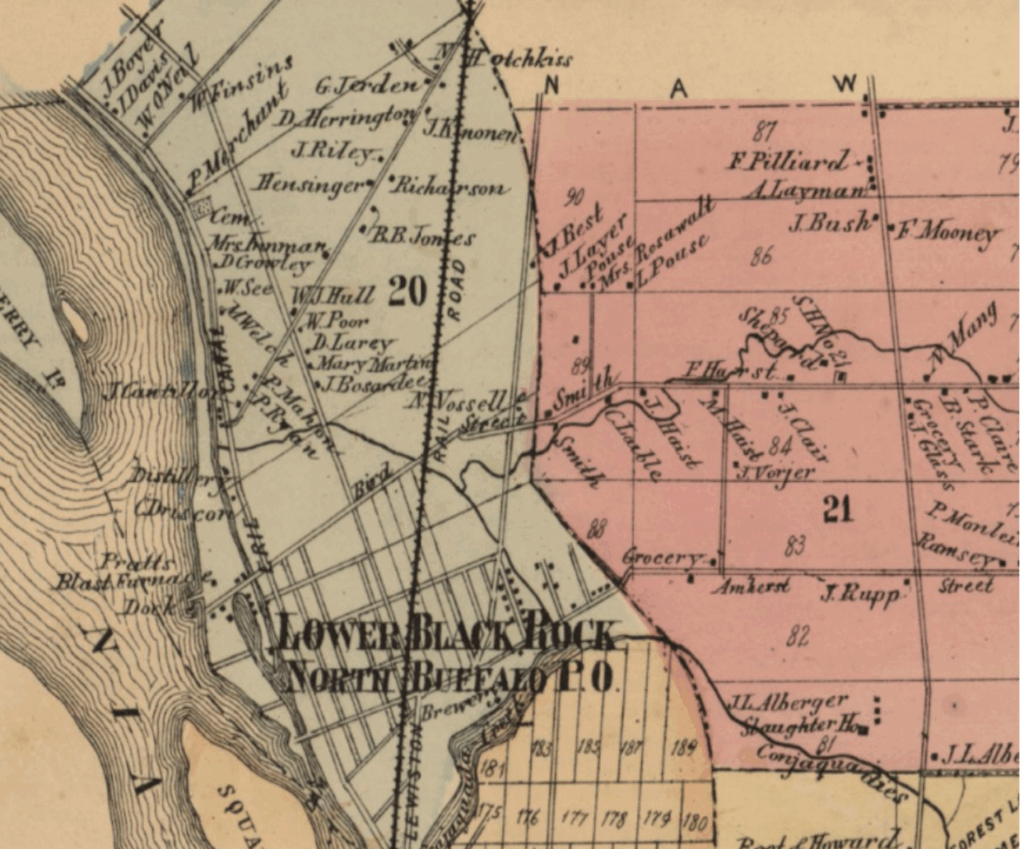
Names such as Bird, Efner, Crowley, Hinkley, and Leible were prominent. In 1870, the Hinkley property becomes Germania Park and then in 1899 Riverside Park.
Below: 1872 Map with owner’s names
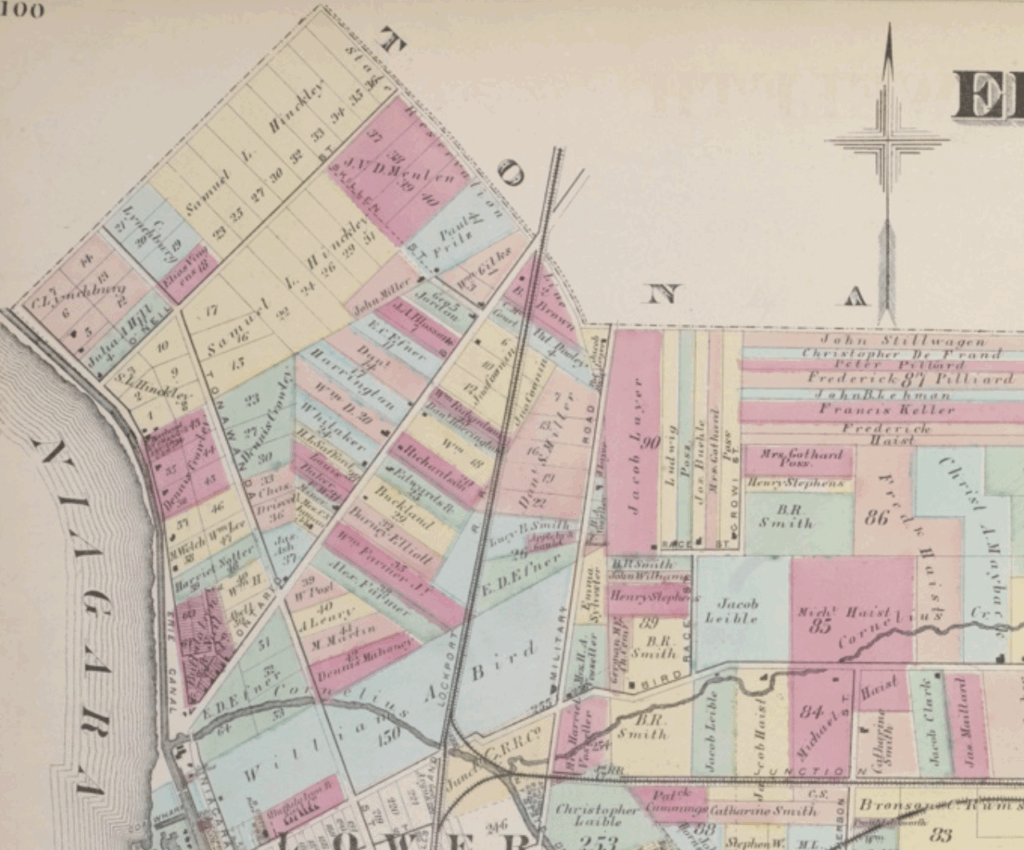
One of the more prominent farms in 1860 was that of Jacob Leible. The farm contained 40 acres of improved and 10 acres of unimproved land. The farm’s assets included two horses, three milk cows, three beef cows, and four swine. Lieble also grew, rye, Indian corn, oats, Irish potatoes, buckwheat, butter and hay for market.
William Bird’s farm in 1850 incorporated 87 acres of improved land. The section between Hertel Avenue and Ontario Street was known as “Bird’s Woods.” The Bird farmhouse was a stone structure that stood at Garfield and Ontario Streets until it was demolished. Hertel Avenue was originally called Bird Avenue after Colonel Bird and was renamed after John Stephen Hertel, a prominent real estate developer and former County Supervisor.
As revenues from the Erie Canal became more plentiful and the farm communities aged out, the Black Rock Land Company began to redevelop the area to include urban housing. The area’s railroad network assisted to attract businesses and industry.
The farms of Riverside were short lived but a wonderful legacy of the area we know now as Riverside, Buffalo, New York.